



Relaxation Techniques
The word relaxation comes from the Latin “relaxatio,” which means relaxation, release, or rest. Relaxation has always been part of human aspirations, in order to lead a harmonious life. We are often experts at control and novices at letting go.
Relaxation, with its various techniques, induces a state of calm and serenity without taking unnecessarily too much medication. Relaxation allows us to clear our minds, and through the practice of letting go, it becomes a therapeutic and/or curative tool.
The word relaxation comes from the Latin “relaxatio,” which means relaxation, release, or rest. Relaxation has always been part of human aspirations, in order to lead a harmonious life. We are often experts at control and novices at letting go.
Relaxation, with its various techniques, induces a state of calm and serenity without taking unnecessarily too much medication. Relaxation allows us to clear our minds, and through learning and practicing letting go, it becomes a therapeutic and/or curative tool.

Breathing
Conscious breathing influences our mental and emotional state. It regulates our nervous system and therefore improves certain physical problems (cardiovascular, anxiety, cognitive functions, sleep, childbirth, etc.).
Movement
When we tap into our natural ability to move, we have a quickly available remedy. By stretching, yoga, and symbolic gestures, we can relax, find the focus, and finally get things going.
Visualization
Are you familiar with the difference between imagination and visualization? The human brain processes the two differently. When we imagine something, the human brain does not consider this content to be true or real. The brain simply takes a picture of the images it sees but doesn’t feel anything. This is a problem because there will be no difference between probable or improbable to our minds. With imagination improbable things like a pink elephant or a baby who already speaks several languages are discredited as much as important things like love or self-confidence .
Visualization, on the other hand, is completely different.
Visualization is a complex mind, body, soul process (unlike imagination, which lasts barely half a second). During visualization, we feed the brain with images; the associated thoughts stimulate emotions, feelings and sensations. This is why the human brain recognizes the information and validates it even in a later situation. For example in visualization sessions if you are working on your “courage”, your brain and nervous system will be able to recognize this “courage” (after sessions of practice), because the mind, body and emotion connection has been made.
This is why visualization forms the basis of NLP and other therapeutic techniques. Neuroplasticity is magical. The human brain can be conditioned. This is expressed through the brain’s ability to create, break down or recognize neural networks and connections between neurons. This is excellent news, because we can anchor many positive thoughts and then use them to our advantage, especially if we put them into practice consistently.
Mantras
A mantra is not just a sacred phrase repeated almost on autopilot. A mantra is a vibration, a wave that travels through the body and mind. The word comes from the Sanskrit “man” – to think, and “trana” – to protect. Listening to mantras can be soothing and even rejuvenating, but the real transformation begins when your own voice starts to vibrate. Practice is very powerful.
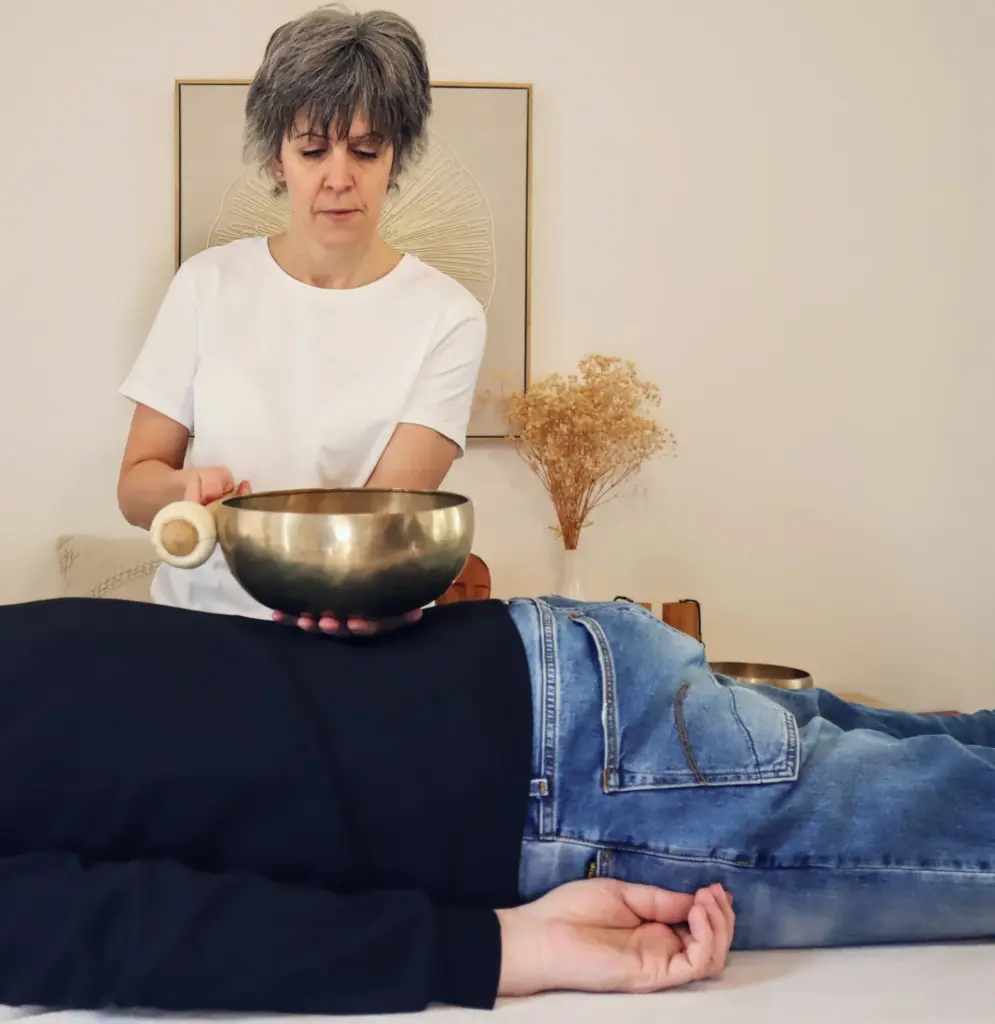
Tibetan bowls and Koshis
The therapeutic benefits of these instruments are well known. The vibrations they emit soothe the body and mind. Letting go becomes easier, and relaxation helps to reduce stress.